

mercredi, 8 juillet, 2026
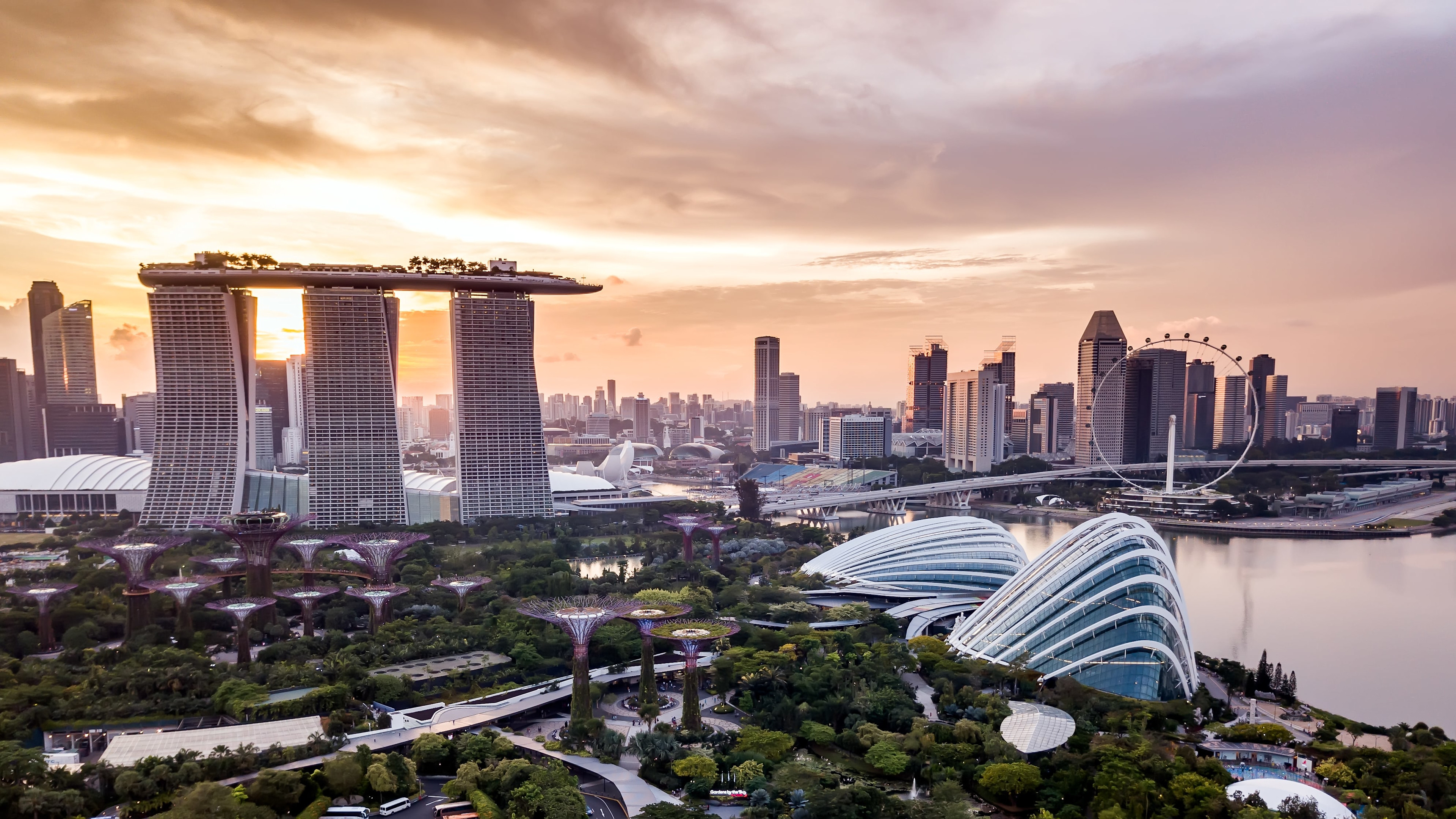
Demand for Flexible Workspace in Jurong Rises, up 142%, Signalling a Shift Towards Decentralised Office Hubs Across Singapore.
Singapore’s flexible workspace market has started strong in 2026, according to The Instant Group, the largest global marketplace for flexible workspace, with demand for flex space rising 10% between January and March 2026, alongside a sharp 77% increase from February to March 2026. The March uplift reflects the latest workspace planning cycles and hiring ramp-ups, alongside a return to full business activity after Chinese New Year. Flexible workspace is typically quick to capture this demand due to its speed to market and agility.
Jurong gaining traction, signalling shift to decentralised business hubs
One of the clearest shifts in Singapore’s flexible workspace market, reflecting a broader trend across APAC, is the growing momentum of decentralised business districts. Jurong stands out as a key growth area, with demand increasing by 142% in 2025 compared to 2024, followed by a further 22% rise in early 2026 (January to March 2026). Considered a secondary CBD in Singapore, Jurong is increasingly establishing itself as a core business hub in its own right, particularly for companies prioritising proximity to residential, retail, entertainment and green space areas, reinforcing its appeal as a ‘live-work-play’ environment.
Despite this, Singapore’s Central Business District (CBD), concentrated mostly around Raffles Place in the historic financial hub, continues to anchor the city’s flex market, accounting for 50% of total flexible workspace demand, the largest share of any district. Jurong represents 17% of demand, followed by Marina Bay (13%), One-North (11%) and Tanjong Pagar (9%), highlighting a more balanced distribution of demand outside of the immediate CBD.
Rising desk rates reflect confidence in quality space
Average desk rates across Singapore increased by 15% in the first quarter of 2026 compared to 2025, with the average rate per desk per month sitting at 687 USD. Marina Bay continues to be the most premium flex district in the city, with rates of 779 USD per desk per month, while a desk in the CBD costs an average of 737 USD - 24% above the city-wide average. Tanjong Pagar sits at 595 USD, Jurong at 532 USD and One-North at 429 USD, offering more affordable and value-led flex options compared to premium CBD counterparts.
Small teams continue to reshape the market
Demand across Singapore’s flex market is increasingly being driven by smaller occupiers, reinforcing the role of flexible workspace as critical infrastructure for modern business of all sizes. The share of 1–2 desk requirements has grown consistently from 50% in 2024 to 57% in early 2026. Meanwhile, 3–9 desk requirements account for approximately 32% of demand in 2026, showing ongoing strength from SMEs, startups and hybrid teams. Together, these segments now dominate the market, reflecting a structural change in how businesses approach office space.
Longer commitments point to a more mature flex market
Average contract lengths have increased from 10.8 months in 2023 to 12.7 months in 2025, representing an 8% CAGR over a two-year period (2023–2025). This signals that flexible workspace is no longer being used purely as a short-term solution, but is increasingly embedded into long-term real estate strategies.
“Businesses are becoming far more deliberate in how and where they use flex, whether that’s securing premium space in the CBD or expanding into strategic decentralised districts like Jurong. Offering employees more choice in locations and a more stable working environment that aligns with lifestyle results in a productive workforce, less attrition and a wider talent pool to select from. Flexible workspace is no longer just about short-term agility, it’s about building a more resilient and scalable workplace portfolio.” said Patrick Gidney, Regional Director, Leasing APAC at The Instant Group.
With demand and pricing strengthening, and decentralised hubs gaining traction, Singapore’s flexible workspace market is giving businesses and employees more choice in how and where they work.
If you would like to access additional data and insights or would like to learn more about the flexible workspace market in Singapore, please contact Sarah Colwell - Flex Data and Insights Lead - sarah.colwell@theinstantgroup.com
Methodology
Data and insights from this report are compiled from The Instant Group’s proprietary flexible industry database, which tracks supply, demand and transactional data across Singapore.
Jurong gaining traction, signalling shift to decentralised business hubs
One of the clearest shifts in Singapore’s flexible workspace market, reflecting a broader trend across APAC, is the growing momentum of decentralised business districts. Jurong stands out as a key growth area, with demand increasing by 142% in 2025 compared to 2024, followed by a further 22% rise in early 2026 (January to March 2026). Considered a secondary CBD in Singapore, Jurong is increasingly establishing itself as a core business hub in its own right, particularly for companies prioritising proximity to residential, retail, entertainment and green space areas, reinforcing its appeal as a ‘live-work-play’ environment.
Despite this, Singapore’s Central Business District (CBD), concentrated mostly around Raffles Place in the historic financial hub, continues to anchor the city’s flex market, accounting for 50% of total flexible workspace demand, the largest share of any district. Jurong represents 17% of demand, followed by Marina Bay (13%), One-North (11%) and Tanjong Pagar (9%), highlighting a more balanced distribution of demand outside of the immediate CBD.
Rising desk rates reflect confidence in quality space
Average desk rates across Singapore increased by 15% in the first quarter of 2026 compared to 2025, with the average rate per desk per month sitting at 687 USD. Marina Bay continues to be the most premium flex district in the city, with rates of 779 USD per desk per month, while a desk in the CBD costs an average of 737 USD - 24% above the city-wide average. Tanjong Pagar sits at 595 USD, Jurong at 532 USD and One-North at 429 USD, offering more affordable and value-led flex options compared to premium CBD counterparts.
Small teams continue to reshape the market
Demand across Singapore’s flex market is increasingly being driven by smaller occupiers, reinforcing the role of flexible workspace as critical infrastructure for modern business of all sizes. The share of 1–2 desk requirements has grown consistently from 50% in 2024 to 57% in early 2026. Meanwhile, 3–9 desk requirements account for approximately 32% of demand in 2026, showing ongoing strength from SMEs, startups and hybrid teams. Together, these segments now dominate the market, reflecting a structural change in how businesses approach office space.
Longer commitments point to a more mature flex market
Average contract lengths have increased from 10.8 months in 2023 to 12.7 months in 2025, representing an 8% CAGR over a two-year period (2023–2025). This signals that flexible workspace is no longer being used purely as a short-term solution, but is increasingly embedded into long-term real estate strategies.
“Businesses are becoming far more deliberate in how and where they use flex, whether that’s securing premium space in the CBD or expanding into strategic decentralised districts like Jurong. Offering employees more choice in locations and a more stable working environment that aligns with lifestyle results in a productive workforce, less attrition and a wider talent pool to select from. Flexible workspace is no longer just about short-term agility, it’s about building a more resilient and scalable workplace portfolio.” said Patrick Gidney, Regional Director, Leasing APAC at The Instant Group.
With demand and pricing strengthening, and decentralised hubs gaining traction, Singapore’s flexible workspace market is giving businesses and employees more choice in how and where they work.
If you would like to access additional data and insights or would like to learn more about the flexible workspace market in Singapore, please contact Sarah Colwell - Flex Data and Insights Lead - sarah.colwell@theinstantgroup.com
Methodology
Data and insights from this report are compiled from The Instant Group’s proprietary flexible industry database, which tracks supply, demand and transactional data across Singapore.
lire ensuite
Hong Kong Flexible Workspace Snapshot

Nos experts peuvent vous fournir des informations ou un rapport sur l'espace de travail flexible adapté à vos spécifications.